I have four products building at once. Each one lives in its own window, its own open conversation with the AI tool I build with. To check on any of them I switch windows, scroll back, and try to remember where I left off.
By Wednesday I have lost the thread.
I cannot tell you what any single product is costing me right now. I cannot tell you which build is sitting idle, waiting on me, and which is still working. I cannot tell you, without digging, what got built this morning. The work is happening. I just cannot see it.
So I stop starting new things. I give the agents a different problem to solve. I want one screen. Every product. Every running build. What each one is costing me. And the thing I keep losing in the noise: what actually needs a decision from me.
The agents build it.
Now I open one page and the whole operation is in front of me. The products, side by side. Which builds are live and which are waiting. The running cost, in plain numbers. A short list of the calls only I can make.
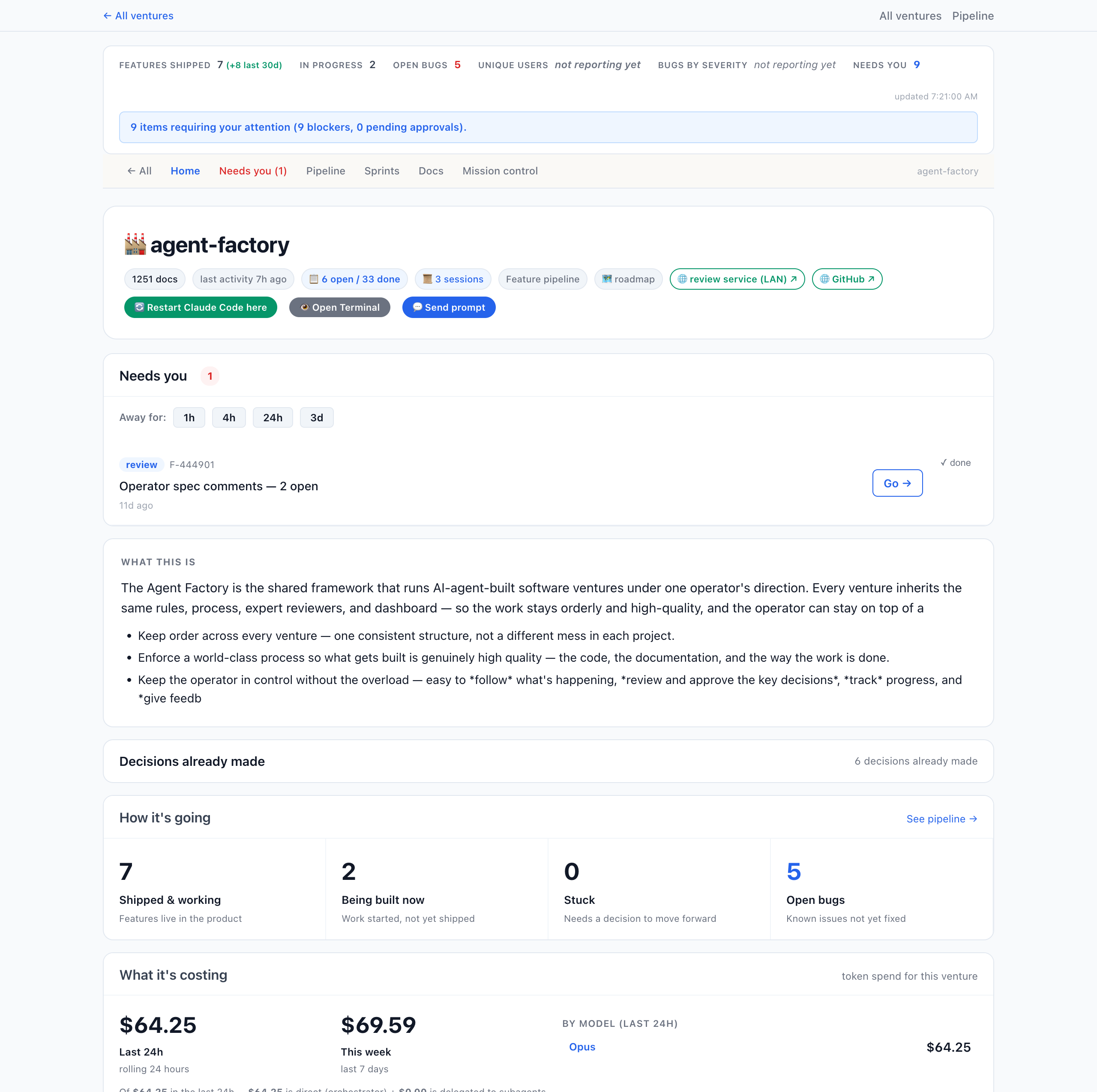
The bottleneck was no longer building. It was seeing what I was building.
I start the week trying to ship four products. I end it having shipped the thing that lets me run four products. The dashboard was the missing one all along.
Learnings
When you are running a handful of builds in parallel, the thing that slows you down is not writing more code. It is losing track of what is already in motion. I felt it as a vague dread by midweek: work was happening in five places and I could hold none of it in my head.
The fix was not another product. It was a single place to see and steer all of them. Build that view before the sprawl starts running you, not after.